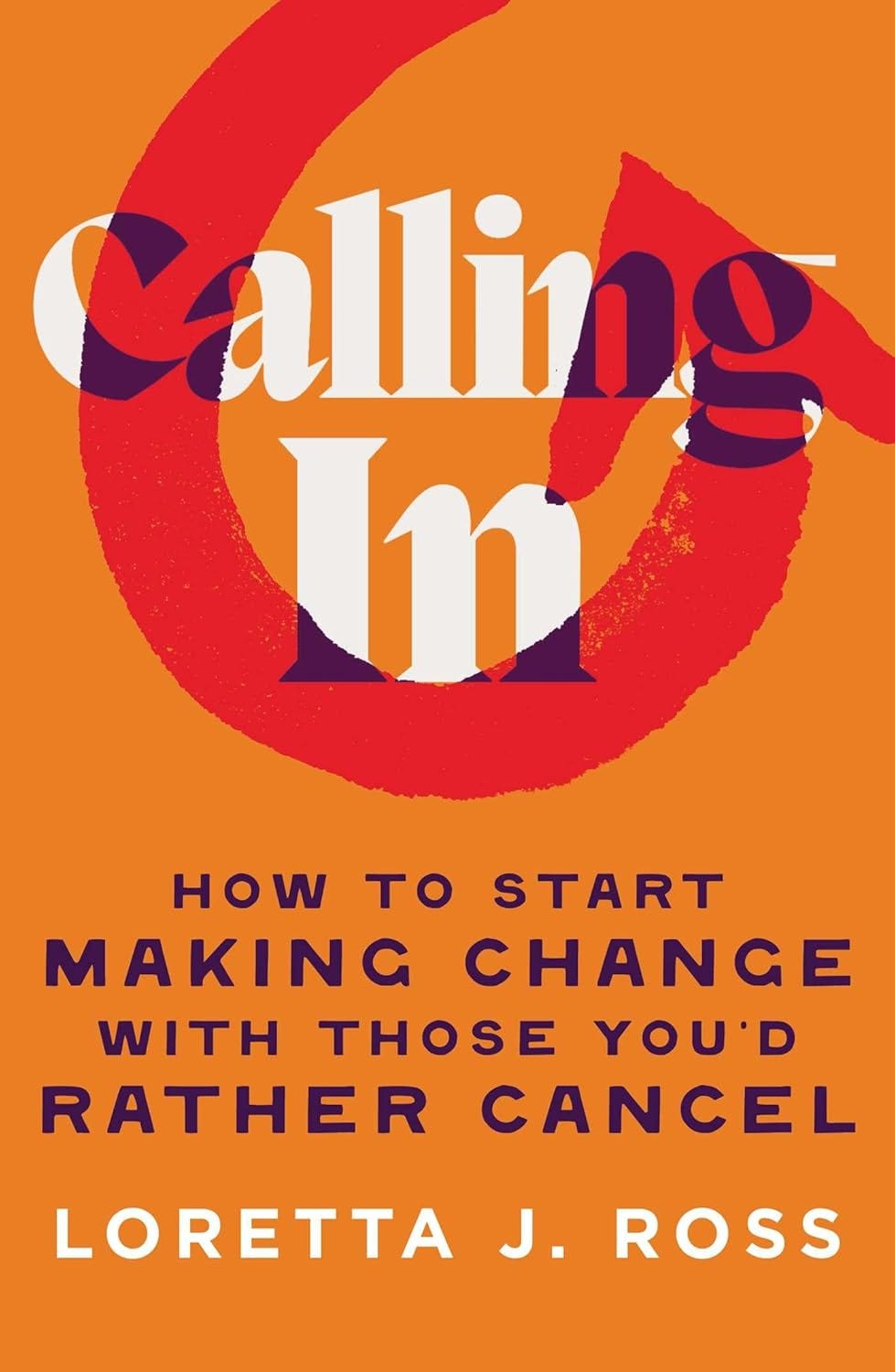
On "Calling In"
6-10-2026

On “Calling In”: In our chaotic and polarized political environment we are being programed to non-communicate with each other. You know the “drill. Someone says something that doesn’t align with your thinking, and we either isolate ourselves from them or call them out “You’re a dumbass and (insert your side’s talking point). These tactics are not the natural way we talk with each other. In almost all other discussions we truly communicate. We don’t talk past each other, we don’t insult each other, we don’t divert the conversation or simply refuse to engage. These non-communication tactics are designed to prevent a real conversation about real issues. The growing gulf created by non-communication is being countered by a number of people who realize that unless we truly have meaningful conversations, we can’t solve problems and our society will splinter into chaos.
A friend and co-worker gave me a copy of Loretta J. Ross’s new book “Calling In, How to Start Making Change With Those You’d Rather Cancel”. It is both an autobiography of a remarkable black woman, who has lived a traumatic life. She has risen above recrimination to draw lessons that can help us move back to real communication, listening, and staying open to conflicting points of view. A necessary book for those who want to re-unify our nation. A “manifesto” that calls for us to look at ourselves and change the way we currently push others away. It is a cry for the healing of ourselves and our country.
Some reading this review will say “what can an old black woman have to say that is relevant to me or today’s problems?” In a very real way, just reading Ms. Ross’s book is a step toward her message. Opening up to ideas, that in our current effort to widen the gap between us, we would take a pass on. A message that is both timely and critical to figuring out how to adapt to a world that is changing at a dizzying pace.
As you read Ms. Ross’s offering you start out thinking it’s a recipe for changing others. You soon realize her main theme. It’s that to change others, we first have to change ourselves. She promotes this approach by telling us about her life trials and her personal path from anger to “calling in” those she disagreed with. Including imprisoned serial rapists.
This is a woman who was sexually abused by multiple people as a child. Someone who experienced poverty as she grew up. Someone who was the victim of both racism and sexism as only this nation is capable of inflicting. Remarkably, her innate talents were recognized by people, who gave her chances and helped her become a successful leader of a number of movements for change. She lays out her life story with all the warts, mistakes and human demons that many will recognize in ourselves. Older and wiser now, Ms Ross hopes to convince us that we all can overcome the challenges and realities of our lives and work together for the common good.
Along the way she provides the techniques on how to recognize our own prejudices and some very specific ways we can break out of non-communication and strive for mutual understanding and then problem solving.
She is no dreamer. She allows that we all have lines that we won’t cross, anger that is difficult to surmount and things like pride and ego that limit how much understanding we can tolerate. She also flat out says that there are extremists on all issues that we need to “call out” and move on. Ms. Ross is aiming for a consensus that gets us back to core principles that most of us actually share and can respect in each other. A novel idea in a world where defining ourselves by our differences seems more important than doing the hard work of finding our agreements.
“Calling In” requires we have real conversations. We open ourselves to what others think, what shaped their views, that how others feel need to be respected and ultimately put up with a lot of discussion that may challenge our own world views to find how we might work together. She is adamant that we can’t expect to align our views completely with someone else’s and need to accept people who don’t check all our boxes. This isn’t a book for liberals or conservatives. But a realistic view, that differences on all sides will remain and the secret sauce is to work on those issues where we can find general agreement. That viewpoint “calls out” both progressives and maga on “purity”, which is a fresh breeze in how most political pundits tally up “success”.
Ms. Ross’s book is a great mate to David McRaney’s book “How Minds Change”. McRaney highlights an organizing technique known as “deep canvasing”. An entire training industry has grown up around this way of having personal conversations, instead of using talking points, to figure out what people have in common and will mutually support. As more people recognize the critical need to talk TO each other, more positive experiences and “how to” efforts will be shared.
With all the advanced technology that puts massive amounts of information literally at our fingertips and ties us together globally, the result is less real interaction and understanding than in any prior time. The masters of these advances have been using them to divide us. To combat that diversion, we must now relearn how to really talk with each other all over again.
ihg 6-10-2026 If you like these commentaries, join my blog for free at: and share. Let’s see what we can build
together